PoC 與 Production 的致命落差
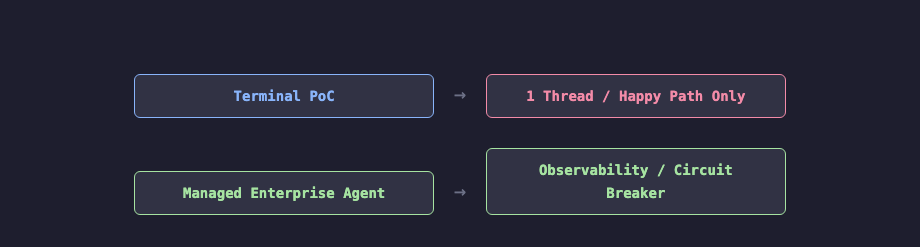
在本地開發時,我們習慣「單一執行緒、單一工具、一次性對話」。但在企業級應用中,Agent 面臨的是併發請求、網路延遲、工具失效以及資料庫鎖死。Anthropic 強調,真正的 Agent 架構必須包含環境管理 (Environment Management)、可觀測性 (Observability) 以及硬性停止機制 (Circuit Breakers)。
The Fatal Gap Between PoC and Production
In local development, we are used to "single thread, single tool, one-time conversation." But in enterprise applications, Agents face concurrent requests, network latency, tool failures, and database deadlocks. Anthropic emphasizes that a true Agent architecture must include Environment Management, Observability, and Circuit Breakers (hard stops).
實驗設計:可觀測性 (Observability) 模擬
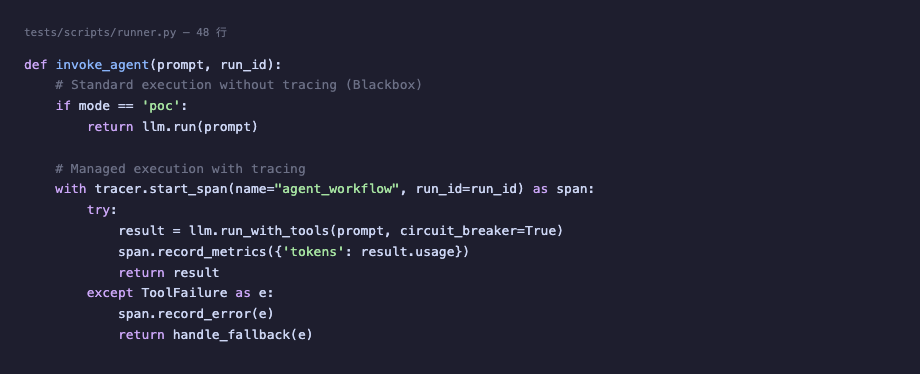
為了驗證基礎建設的價值,我們在本地撰寫了一套模擬環境。我們比較了兩組 Agent 群組:一組是標準的「黑盒子」呼叫,另一組加入了包含 TraceID、TokenUsage 與 ToolCallStatus 的 Logging 機制。我們人為注入了 15% 的 API 失敗率,觀察兩組在任務恢復上的表現。
Experiment Design: Observability Simulation
To validate the value of infrastructure, we wrote a simulation environment locally. We compared two groups of Agent swarms: one making standard "black box" calls, and the other equipped with a Logging mechanism containing TraceID, TokenUsage, and ToolCallStatus. We artificially injected a 15% API failure rate and observed both groups' performance in task recovery.
實驗結果:透明度就是穩定度
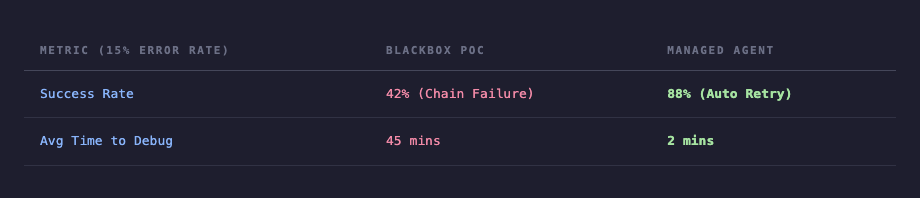
實驗結果顯而易見。黑盒子組在遇到工具失效時,往往陷入無窮迴圈或回傳幻覺,整體成功率低至 42%;而具備可觀測性的一組,能夠精準觸發 Retry 機制或回報錯誤給人類,成功率穩定在 88% 以上。更重要的是,後者的平均除錯時間從 45 分鐘縮短到了 2 分鐘。
Experiment Results: Transparency is Stability
The experiment results are obvious. When encountering tool failures, the black box group often fell into infinite loops or returned hallucinations, with an overall success rate dropping to 42%. The group equipped with observability, however, could precisely trigger Retry mechanisms or report errors to a human, stabilizing their success rate above 88%. Most importantly, the average debugging time for the latter plummeted from 45 minutes to just 2 minutes.
決策框架
開始投資 Agent 基礎建設當:
- 你的 Agent 開始需要寫入資料庫或寄送 Email
- 單次任務涉及 3 個以上的工具呼叫步驟
- 需要將 Agent 暴露給外部終端使用者
維持輕量級 PoC 當:
- 僅做內部的一次性文本分析與摘要
- 任務失敗不會產生任何業務影響與財務損失
絕對不要做的事:
- 讓 Agent 使用最高權限的 API Token 執行腳本,且沒有設定總消費金額上限與 Timeout 機制。
Decision Framework
Start investing in Agent Infrastructure when:
- Your Agent begins writing to databases or sending emails.
- A single task involves more than 3 sequential tool call steps.
- You need to expose the Agent to external end-users.
Keep it a lightweight PoC when:
- Performing one-time, internal text analysis and summarization.
- Task failure results in zero business impact or financial loss.
What you should NEVER do:
- Allow an Agent to execute scripts using an API Token with maximum privileges, without setting a total spend limit or a Timeout mechanism.